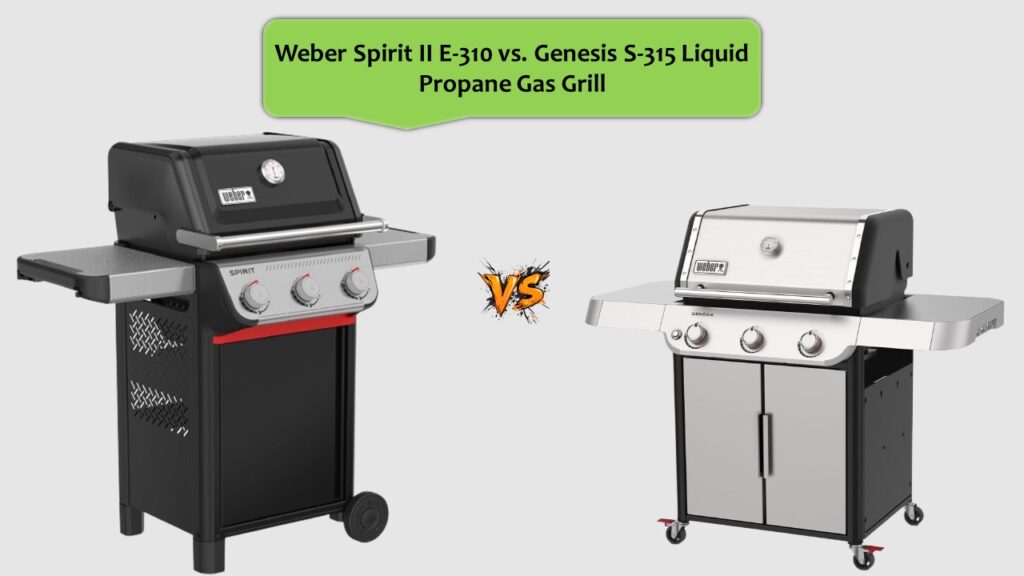
Stepping onto the patio with a tray of marinated ribeyes is a ritual that deserves the right machinery. Over the last month, I’ve been living a dual life behind the grates, oscillating between the “reliable neighbor” of the grilling world—the Weber Spirit II E-310—and the “refined professional”—the Weber Genesis S-315.
It’s easy to look at two 3-burner gas grills from the same legendary brand and assume you’re just paying for a different coat of paint. But after searing, roasting, and smoking my way through several family cookouts in early 2026, I’ve realized these two machines represent very different philosophies. One is a compact, high-value workhorse that prioritizes simplicity and durability, while the other is a high-performance culinary station designed to be an outdoor kitchen. If you’re torn between saving some cash or investing in a stainless-steel legacy, I’ve got some greasy-handed insights that might make your decision a lot clearer.
The Key Difference: Burner Tech and “Kitchen” Capability
The fundamental difference between the Weber Spirit II E-310 and the Genesis S-315 lies in the burner architecture and accessory ecosystem. The Weber Spirit II E-310 is an entry-level professional grill featuring a cast-aluminum cookbox and standard high-efficiency burners, designed for straightforward, reliable BBQ.
The Weber Genesis S-315 is a premium upgrade featuring PureBlu tapered burners for superior heat distribution, stainless steel cooking grates (as opposed to the Spirit’s porcelain-enameled cast iron), and the WEBER CRAFTED frame kit, which allows the grill to transform into a pizza oven, griddle, or sear station with custom-fit grillware.
Comparison Table: Weber Spirit II E-310 vs. Genesis S-315
| Feature | Weber Spirit II E-310 | Weber Genesis S-315 |
| Burner System | 3 Stainless Steel Burners | 3 PureBlu Tapered Burners |
| Grate Material | Porcelain-Enameled Cast-Iron | 7mm Stainless Steel |
| Ignition | Snap-Jet (Push & Turn) | Electronic Ignition |
| Expandability | Weber Works Side Rails | WEBER CRAFTED Frame Kit |
| Side Tables | Hammertone Metal | Extra-Large Stainless Steel |
| Storage | Open Cart / Cabinet Style | Full Cabinet with Doors |
| Width | 48.3 Inches | 57.7 Inches |
| Warranty | 10-Year Limited | 12-Year Limited (varies by component) |
| View Current Price on Amazon | View on Amazon | View on Amazon |
Detailed Comparative Review: My Personal Grilling Odyssey
I decided to run these grills through the “Sunday Night Gauntlet”: a mix of high-heat searing for steaks, indirect heat for a whole chicken, and a delicate warming test for brioche buns.
Design: Compact Ruggedness vs. Stately Elegance
When I first rolled the Spirit II E-310 into place, I appreciated its footprint. It’s a 48-inch grill that feels sturdy but doesn’t dominate the patio. The black finish and cast-aluminum cookbox give it a “no-nonsense” look. The Weber Works side rails are a neat 2026 update—I snapped on a bottle holder and some extra tool hooks, which made the small space feel much more organized.
The Genesis S-315 is a different beast entirely. It is significantly wider (nearly 58 inches) and finished in gleaming stainless steel. It feels less like a “barbecue” and more like a piece of high-end kitchen furniture. The full cabinet doors are a major plus for me; they hide the propane tank and my messy collection of brushes and covers. If the Spirit is a reliable pick-up truck, the Genesis is a luxury SUV.
Ease of Use: The “PureBlu” Precision
Lighting the Spirit II is a breeze with the Snap-Jet ignition. You just push and turn, and it catches almost every time on the first click. It heats up quickly, reaching 500°F in about 10–12 minutes. The heat is consistent, but I did notice a few “hotter” spots toward the back of the grates, which is typical for standard tube burners.
The Genesis S-315 features the new PureBlu burners. These have a tapered design that supposedly ensures the flame is consistent from front to back. In my testing, this wasn’t just marketing—it actually worked. When I laid out 12 burgers across the entire surface, they all reached medium-well at almost the exact same time. The stainless steel grates also require less “prep” than cast iron. I didn’t have to worry as much about seasoning them to prevent sticking; they provided a clean, professional sear right out of the box.
Functions: The “Outdoor Kitchen” Evolution
This is where the Genesis S-315 really pulled away. I’m a big fan of the WEBER CRAFTED system. One evening, I swapped out the right-side grate for the custom-fit pizza stone. Because the Genesis has better heat retention and a larger internal volume, it acted like a true masonry oven. You simply can’t do that level of specialized cooking on the Spirit.
The Spirit II E-310 is designed for the purist. It roasts perfectly, and the Flavorizer Bars do an excellent job of vaporizing drippings to give that classic “char-grilled” taste. It has a warming rack that worked beautifully for toasting buns while the patties finished below. It does the basics at a 10/10 level, but it doesn’t try to be anything other than a great grill.
Maintenance: The Grease Management Game
Both grills utilize Weber’s signature Grease Management System. I love that the tray slides out from the front (on the Spirit) or the side (on the Genesis) so you aren’t reaching into a dark, greasy abyss.
However, the Genesis S-315 has a slight edge in cleanliness. The PureBlu burners have raised flame openings that prevent food debris from falling directly into the gas ports. After a particularly messy session with honey-glazed wings, I found the Genesis burners were much cleaner than the Spirit’s, which required a bit of brushing to clear some clogged ports.
Weber Spirit II E-310 Liquid Propane Gas Grill
Pros:
- Value: Significant performance for a much lower price point than the Genesis.
- Durability: The cast-aluminum cookbox is virtually rust-proof and holds up for decades.
- Compact: Fits perfectly on smaller decks or balconies.
- Weber Works: The snap-on accessory system is surprisingly handy for tool organization.
Cons:
- Cast Iron Upkeep: Grates require regular oiling to stay in top shape.
- Basic Tech: Standard burners have slightly more “hot and cold” zones.
- Limited Scope: Not compatible with the full WEBER CRAFTED gourmet system.
Weber Genesis S-315 Liquid Propane Gas Grill
Pros:
- Uniform Heat: PureBlu burners offer the most even cooking surface I’ve tested.
- Stainless Steel Everything: High-grade grates and Flavorizer bars resist corrosion and look premium.
- Culinary Versatility: The frame kit turns the grill into a griddle, pizza oven, or wok.
- Storage: Full cabinet design keeps the patio looking tidy and protects the fuel tank.
Cons:
- Large Footprint: Requires a lot of deck “real estate.”
- Higher Price: It is a major investment for a 3-burner grill.
- Complexity: More features mean more things to clean and maintain over time.
The Final Recommendation: Which Weber Wins?
After a month of back-to-back grilling, I’ve found that the “best” grill depends on how you view your weekend cooking.
I recommend the Weber Spirit II E-310 if you are a “burgers, brats, and steaks” kind of griller. If you want a machine that will last 15 years, start every time, and provide a perfect sear without a massive price tag, the Spirit is the gold standard. It’s the perfect choice for the homeowner who wants quality without the complexity.

Weber® Spirit E-310 Gas Grill, Outdoor Cooking, Small Propane Grill, Black | 3 Burners, Porcelain-Enameled Cast-Iron Grates, Snap-Jet Ignition, Weber…
- The Black Weber Spirit E-310 Grill has a 10-year limited warranty; Weber Works side rails fit snap-on accessories (sold separately) such as a Bottle Holder, extra Tool Hooks, and Flexible Lighting to give you more room at the grill
- Precise, Consistent Heat: Outdoor propane grill gets to temp quickly and cooks food evenly across the grates; Porcelain-enameled, cast-iron grates retain heat evenly, are easy to clean, and built to last
I recommend the Weber Genesis S-315 if you view grilling as a hobby rather than a chore. If you want to bake pizzas, sear scallops on a griddle, or rotisserie a whole turkey, the Genesis is worth the upgrade. The stainless steel construction and PureBlu burner technology make it a “pro-sumer” tool that elevates the entire outdoor cooking experience.

Weber® Genesis S-315 Gas Grill, Propane Grill, Stainless Steel BBQ Grill | 3 PureBlu® Burners, Stainless-Steel Cooking Grates, Stainless-Steel Side…
- Weber Stainless Steel Genesis Grill includes PureBlu burners with a unique, tapered design, creating a consistent flame and even heat across the grilling surface; Raised flame openings keep food debris falling away, minimizing clogs and corrosion
- Stainless Steel Grates and FLAVORIZER Bars: Propane gas grill's cooking grates heat quickly and are highly durable; FLAVORIZER Bars catch and vaporize juices, boost grilled flavor, funnel grease away from the burners, and prevent flare-ups
Personally, I would choose the Genesis S-315. The sheer evenness of the heat across the entire grate and the ability to pop in a pizza stone makes it feel like I’ve added a whole new room to my house.
Frequently Asked Questions (FAQs)
Q: Is the Genesis hotter than the Spirit?
A: Not necessarily in terms of raw temperature—both can hit 600°F+. However, the Genesis is more consistent. It holds that heat better when you open the lid and distributes it more evenly across the grates.
Q: Can I use the WEBER CRAFTED accessories on the Spirit?
A: Generally, no. The Spirit II series is not designed to accommodate the frame kit and the specific dimensions of the CRAFTED grillware.
Q: Are the stainless steel grates better than cast iron?
A: It’s a preference. Cast iron (Spirit) holds heat slightly better for thick sear marks but requires more maintenance. Stainless steel (Genesis) is much easier to clean, won’t rust, and heats up faster.
Q: How long does the tank last?
A: On both models, a standard 20-lb propane tank will give you about 18–20 hours of grilling time on medium-high. Because the Genesis has slightly more efficient burners, you might squeeze out an extra hour or two.
Q: Is the Genesis S-315 rust-proof?
A: The high-grade stainless steel is highly resistant to rust, but if you live near the ocean (salt air), I still recommend a high-quality Weber cover to keep the finish pristine.