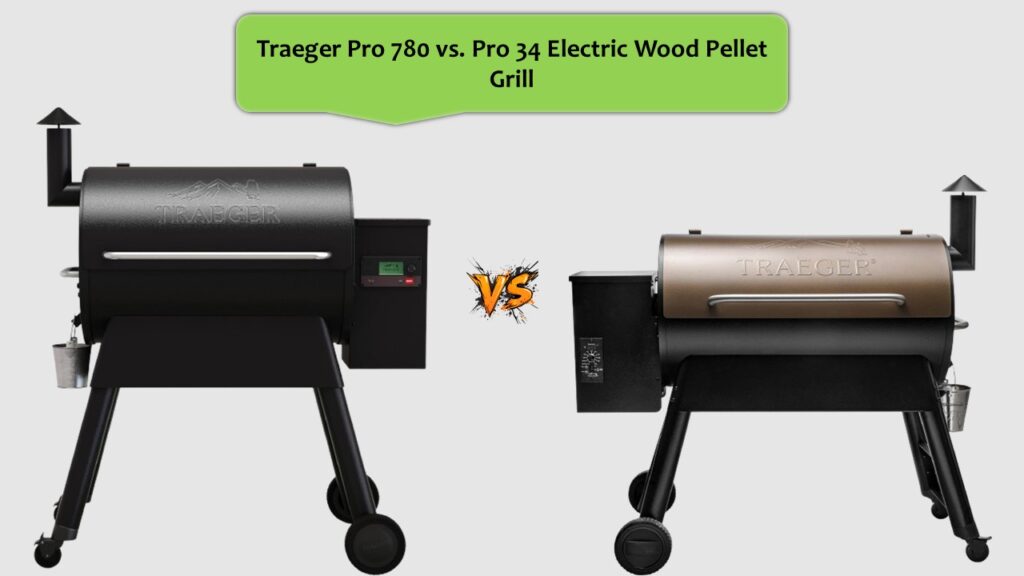
There is a distinct kind of magic that happens when you pour a bag of hickory pellets into a hopper and hear that first mechanical whir of the auger. This past month, my backyard has been a haze of blue smoke as I’ve lived with two of the most popular pellet grills on the market: the Traeger Pro 780 and the Traeger Pro 34.
Choosing between these two is a bit like deciding between a classic 1960s muscle car and a modern electric sedan. One is a sprawling, analog beast that relies on brute size and mechanical simplicity, while the other is a sleek, Wi-Fi-connected computer that happens to cook incredible brisket. I’ve spent countless hours monitoring internal temps, scrubbing porcelain grates, and – most importantly – eating a lot of ribs to figure out which of these “Pro” models actually earns its keep on a Saturday afternoon. If you’re torn between more cooking space and more “brain” power, my grease-stained notes from the last few weeks are about to clear the air.
The Key Difference: Technology vs. Territory
The fundamental difference between the Traeger Pro 780 and the Pro 34 is the balance of internal technology versus raw cooking surface. The Traeger Pro 780 is a modern “Smart” grill featuring WiFIRE technology, which allows for remote smartphone control, and the D2 Drivetrain with a brushless motor for faster heating and more precise temperature management.
Conversely, the Traeger Pro 34 is a “Classic” series grill that lacks Wi-Fi but offers a significantly larger 884 square inches of cooking space (compared to the 780’s 780 sq. in.) and utilizes the older Digital Pro Controller with Advanced Grilling Logic. Essentially, you are choosing between the precision and convenience of the Pro 780 or the raw capacity and value of the Pro 34.
Comparison Table: Traeger Pro 780 vs. Pro 34 Wood Pellet Grill
| Feature | Traeger Pro 780 | Traeger Pro 34 |
| Controller | D2 Smart Controller | Digital Pro Controller |
| Connectivity | WiFIRE (Wi-Fi & App) | None (Manual Dial) |
| Cooking Space | 780 sq. in. | 884 sq. in. |
| Motor Type | Brushless (D2 Drivetrain) | Standard DC Motor |
| Temp Precision | +/- 5°F (Precise) | +/- 15°F (Variable) |
| TurboTemp | Yes (Quick recovery) | No |
| Max Temp | 500°F (approx.) | 450°F |
| Weight | 166.6 lbs (Heavy Duty) | 136 lbs |
| Capacity | 34 Burgers / 6 Chickens | 40 Burgers / 8 Chickens |
| View Current Price on Amazon | View on Amazon | View on Amazon |
Detailed Comparative Review: My Personal Take from the Pit
I decided to run these two through the “Game Day Gauntlet.” I smoked a 12-pound brisket on the Pro 780 while simultaneously loading the Pro 34 with enough chicken wings to feed my entire neighborhood. Here is how they actually performed in the heat of battle.
Design: The Modern Tank vs. The Bronze Giant
The Pro 780 feels like a piece of high-end machinery. The black finish is sleek, but it’s the “stance” that I noticed first. It’s heavy—about 30 pounds heavier than the Pro 34 – and that weight comes from a sturdier alloy steel build. The all-weather wheels are solid, and moving it across my stone patio felt stable. It looks like a grill that belongs in a 2026 smart home.
The Pro 34, in its iconic bronze finish, is noticeably wider. It’s 53 inches across compared to the 49 inches of the 780. It has a more “classic BBQ” silhouette. While it’s lighter, it feels more utilitarian. The all-terrain wheels are great for moving it over grass, but it lacks the refined feel of the 780’s frame. If the Pro 780 is a laboratory, the Pro 34 is a workshop.
Ease of Use: Smartphone Control vs. The Manual Dial
This is where the two grills feel decades apart. Using the Pro 780 with WiFIRE changed my entire weekend. I was able to go to the grocery store for more sauce while monitoring my brisket’s internal temp on my phone. If the grill temp dipped or the pellet level got low, I got an alert. The D2 Drivetrain is also incredibly quiet; you don’t get that loud “industrial” drone you find on older pellet grills.
The Pro 34 is old-school. You turn the dial to your desired temp, and you have to be physically present to check the meat probe or adjust the heat. The Digital Pro Controller is reliable, but it has more “swing.” I noticed the temp would fluctuate about 15 degrees in either direction. It didn’t ruin the food, but it required more babysitting. If you enjoy the process of “tending the fire,” you’ll like the 34. If you want to set it at 10 PM and sleep like a baby, the 780 is the only way to go.
Functions: Speed, Capacity, and Smoke
The Pro 780 features TurboTemp, and I actually timed it. After I opened the lid to sprits my brisket, the 780 returned to its set temperature in about 3 minutes. The Pro 34 took nearly 8 minutes to recover that same lost heat. This matters for consistency. However, the 780 is limited to “only” 34 burgers.
The Pro 884 (Pro 34) is a beast of burden. When I had the whole neighborhood over, that extra 100 square inches was the difference between cooking in one shift or two. I was able to fit 8 whole chickens on that grate without them touching. For sheer volume, the Pro 34 is hard to beat. Both grills offer 6-in-1 versatility, meaning I could bake a wood-fired pizza just as easily as I could smoke ribs. The smoke flavor was identical on both—rich, clean, and unmistakable.
Maintenance: Cleaning the Beast
Both grills use porcelain-enameled grates which are a dream to clean – I usually just give them a quick scrape while they’re still warm. The Pro 780 feels a bit more refined in its grease management, but both require the same basic maintenance: vacuuming out the firepot every few cooks and changing the foil on the drip tray.
Because the Pro 780 has a brushless motor, it’s supposed to be more “maintenance-free” over the long haul. The Pro 34 uses a standard auger motor that’s a bit noisier and might eventually need more attention, but it’s also much easier (and cheaper) to find replacement parts for because it’s a more “standard” design.
Traeger Pro 780 Electric Wood Pellet Grill
Pros:
- WiFIRE Tech: Total control from your couch or the store.
- D2 Drivetrain: Faster heating, quieter operation, and better temp stability.
- TurboTemp: Rapid heat recovery after opening the lid.
- Precision: Maintains heat within 5 degrees of the target.
Cons:
- Price: More expensive per square inch of cooking space.
- Complex Electronics: More “tech” that could theoretically glitch.
- Smaller Capacity: Not as ideal for massive block parties.
Traeger Pro 34 Electric Wood Pellet Grill
Pros:
- Massive Capacity: 884 square inches is enough for the biggest crowds.
- Price-to-Size Value: You get a huge cooking area for a lower price.
- Simple Mechanics: No Wi-Fi or apps to worry about.
- Classic Durability: Proven “Digital Pro” controller logic.
Cons:
- Manual Only: No remote monitoring or alerts.
- Temperature Swings: Less precise than the newer D2 models.
- Slow Recovery: Takes longer to get back to temp after checking food.
The Final Recommendation: Which Traeger Wins?
After a month of back-to-back smoking, the winner depends on your “Pitmaster” personality.
I recommend the Traeger Pro 780 if you love technology and consistency. If you want a “set-it-and-forget-it” experience where you can monitor your food from a mile away, the 780 is the gold standard. The D2 Drivetrain makes it a more professional, consistent tool for people who want perfect results with zero guesswork.

- Smart Grilling with WiFIRE technology: Control your electric smoker grill from anywhere with...
- Temperature Control with D2 Drivetrain: The upgraded D2 controller and brushless motor bring...
I recommend the Traeger Pro 34 if you are a “Volume Griller” on a budget. If you regularly cook for more than 10 people and you don’t mind walking out to the patio to check your temp, the Pro 34 is the best value in the lineup. It’s a workhorse that trades fancy apps for raw, unadulterated cooking space.

- Never use gas or charcoal again: cooking with wood just tastes better. Traeger created the...
- Versatile barbecue cooking: hot and fast, or low and slow, the Traeger Pro Series 34 pellet...
Personally, I would choose the Traeger Pro 780. The WiFIRE app is so well-designed that it actually makes grilling more fun, and the peace of mind of knowing exactly what’s happening in the cookbox is worth the extra investment.
Frequently Asked Questions (FAQs)
Q: Does the Pro 780 require Wi-Fi to work?
A: No. You can use it manually just like any other grill. The Wi-Fi is an optional (but highly recommended) luxury.
Q: Can the Pro 34 reach 500°F?
A: It is rated for a max of 450°F. While it can technically sear, it’s much better at smoking and roasting. The Pro 780 can get slightly hotter, which is better for crispy skin on chicken.
Q: Are Traeger grills electric or wood-fueled?
A: Both. They use electric power to run the controller, auger, and fan, but the actual heat and flavor come from burning wood pellets.
Q: How long does a bag of pellets last?
A: On a “low and slow” smoke, a 20-lb bag can last 15–20 hours. If you’re grilling at high heat, you might burn through a bag in 6–8 hours.
Q: Is the bronze finish on the Pro 34 durable?
A: Yes. It’s a powder-coated steel finish that is designed to withstand high heat and weather, though I always recommend a cover to keep it looking new.