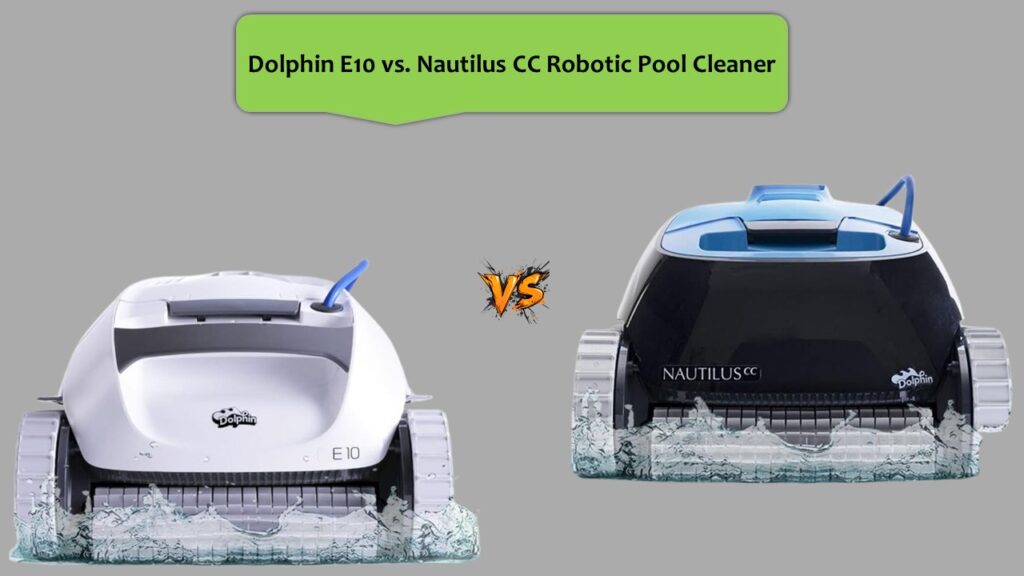
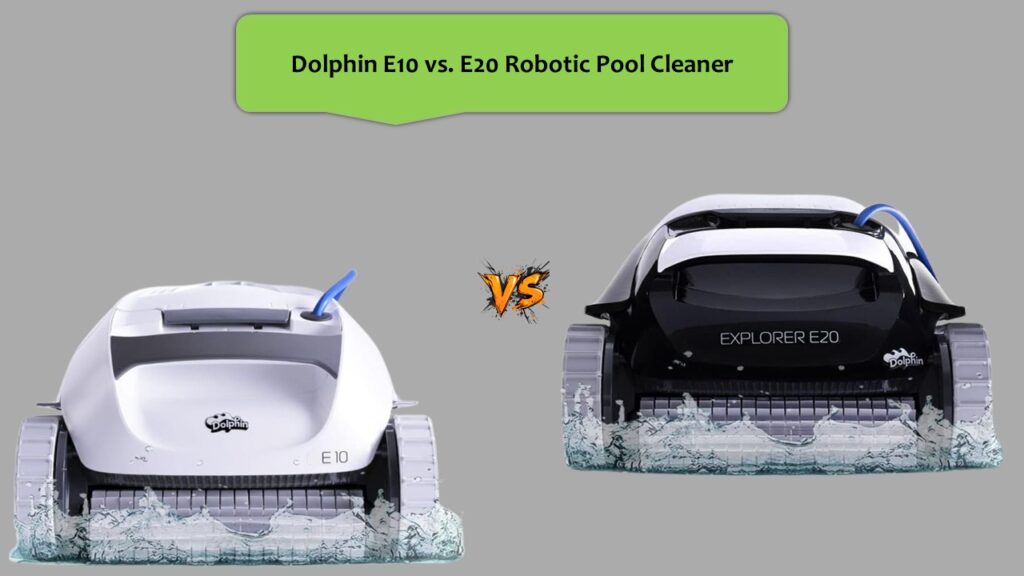
Imagine standing at the edge of your pool on a Saturday morning, coffee in hand, staring at a layer of silt and leaves on the floor. You have two choices: spend the next hour sweating over a manual vacuum pole, or drop a robotic “pool pet” into the water and go back to your breakfast. This is the reality of owning a Dolphin, but choosing between the Dolphin E10 and the Dolphin Explorer E20 feels like deciding whether you want a reliable floor sweeper or a nimble mountain climber.
Over the last few weeks of the 2026 swim season, I’ve had both of these latest models patrolling my backyard oasis. They are remarkably similar in their DNA—both are lightweight, corded, and incredibly simple to operate. However, after watching them navigate the curves of my pool, I’ve realized that the “20” in E20 stands for much more than just a slightly longer cleaning cycle. It represents a fundamental shift in how much of your pool actually gets cleaned.
The Key Difference: The Vertical Limit
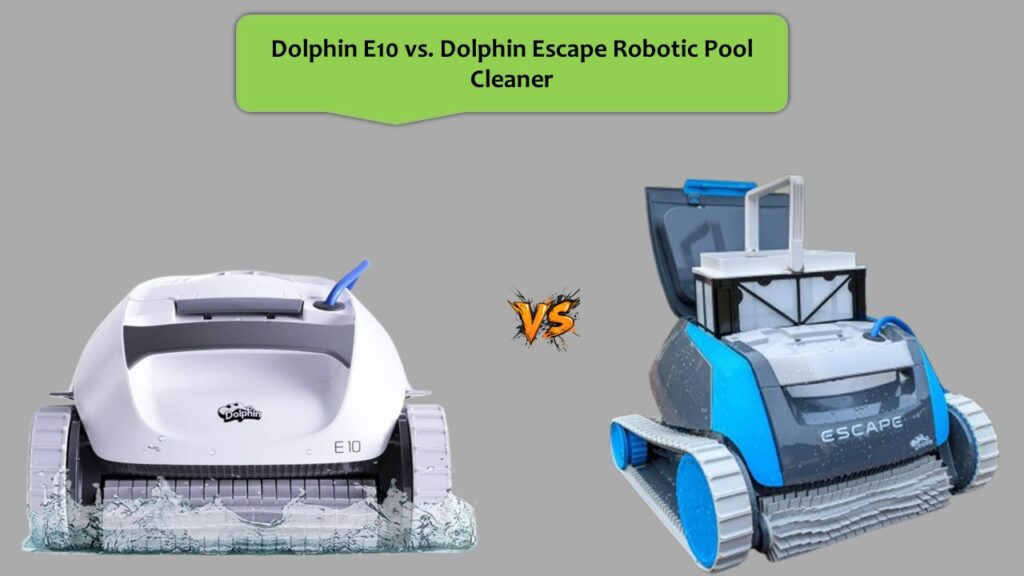
The fundamental difference between the Dolphin E10 and the Dolphin E20 is their ability to handle vertical surfaces. The Dolphin E10 is designed strictly as a floor cleaner, making it the go-to choice for above-ground pools where the floor is the primary collection point for debris.
The Dolphin Explorer E20, conversely, features wall-climbing technology, allowing it to scale the sides of your pool up to the waterline to scrub away the “scum line” that develops at the surface. Additionally, the E20 has a slightly longer cleaning cycle of 2 hours (compared to the E10’s 1.5 hours) and is rated for slightly larger pools up to 33 feet.
Comparison Table: Dolphin E10 vs. Explorer E20
| Feature | Dolphin E10 | Dolphin Explorer E20 |
| Cleaning Coverage | Floor Only | Floor and Walls |
| Pool Type | Ideal for Above-Ground | Above-Ground or Small In-Ground |
| Cleaning Cycle | 1.5 Hours | 2 Hours |
| Max Pool Length | 30 Feet | 33 Feet |
| Filtration | Top-Load Basket | Top-Load Basket |
| Scrubbing | 1 Active Brush | 1 Active Brush |
| Navigation | Smart Navigation | Smart Navigation |
| Weight | ~13.8 lbs | ~15 lbs |
| Wall Climbing | No | Yes |
| View Current Price on Amazon | View on Amazon | View on Amazon |
Detailed Comparative Review: My Personal “Pool Side” Take
Testing these robots required more than just turning them on; it required intentionally making a mess to see how they handled the chaos.
Design: Lightweight and Logic
Both robots share the classic Dolphin silhouette—compact, rugged, and finished in high-quality plastics. The Dolphin E10 feels exceptionally light. When I pulled it out of the water at the end of a cycle, I didn’t feel like I was lifting a piece of heavy machinery. It’s manageable for almost anyone.
The Explorer E20 looks a bit more “aggressive,” especially in its 2026 black colorway. It weighs about 10.8 kg (roughly 24 lbs when dry), but it feels very balanced. The most impressive design element on both is the Active Scrubber Brush. Unlike some older robots that just glide over dirt, these brushes spin twice as fast as the robot moves. I watched the E10 tackle a patch of algae on the floor, and you could actually see the brush “eating” the green film before it sucked it up.
Ease of Use: The Beauty of “Drop and Go”
If you hate complicated apps and Bluetooth pairing, you will love these. They are the definition of “Plug-and-Play.” I literally plugged the power supply into my outdoor outlet, dropped the robot into the deep end, and hit the power button.
The E10 finishes its work in 90 minutes. For a 24-foot round above-ground pool, this is the perfect amount of time. The E20 takes 120 minutes. I noticed that the E20 spends a good portion of that extra 30 minutes shimmying up the walls. There is something deeply satisfying about watching a robot defy gravity to scrub the waterline where the sunscreen and oils usually build up.
Functions: Scaling the Walls
This is where the honeymoon phase with the E10 might end for some. I tested the E10 in a small in-ground pool, and it did a fantastic job on the floor. But when it hit the transition where the floor meets the wall, it just… turned around. It left the walls entirely to me and my manual brush.
The Explorer E20 is a climber. It uses a clever water-jet propulsion system to “stick” itself to the wall. I saw it climb all the way to the top, scrub for a few seconds, and then descend gracefully. If you have an in-ground pool with tile at the waterline, the E20 is the only real choice here. It eliminates the need for you to walk around the perimeter with a hand brush once a week.
Maintenance: The Top-Load Revolution
In the old days, cleaning a pool robot involved flipping it over and unzipping a messy bag. Both the E10 and E20 have moved past that nightmare. They feature Top-Load Filter Baskets.
I just popped the lid on the top, lifted the basket out by the handle, and hosed it off. In my month of testing, the E10 basket seemed to fill up faster because it was concentrated only on floor debris (which tends to be heavier). The E20’s basket is essentially the same size, and it handled a mix of leaves, sand, and fine silt brilliantly. One tip from my experience: rinse the filters every time. If you let the fine silt dry in the mesh, the robot’s suction will drop significantly during the next run.
Dolphin E10 Robotic Pool Cleaner
Pros:
- Ultra-Lightweight: Extremely easy to carry and remove from the water.
- Efficient Cycle:5 hours is perfect for a quick refresh before a swim.
- Cost-Effective: The most affordable way to get into the Dolphin ecosystem.
- Floor Specialist: Does an incredible job on sand and silt on the bottom.
Cons:
- No Walls: You will still have to manually brush your pool walls.
- Limited Cable: Only rated for pools up to 30 feet.
- Basic Timer: No advanced scheduling features.
Dolphin Explorer E20 Robotic Pool Cleaner
Pros:
- Full Coverage: Scrubs the floor and the walls, including the waterline.
- Self-Propelled: Nimble navigation that rarely gets stuck on drains.
- Deep Clean: The 2-hour cycle ensures a much more thorough scouring of the surfaces.
- Versatility: Works equally well in above-ground and in-ground setups.
Cons:
- Higher Price: You pay a premium for that wall-climbing motor.
- Weight: Slightly heavier to pull out of the water than the E10.
- Power Draw: Slightly higher electricity usage due to the longer cycle and climbing.
The Final Recommendation: Which Dolphin Wins?
After letting these two battle it out in my pool, the winner depends entirely on what your pool looks like.
I recommend the Dolphin E10 if you have a standard above-ground pool. Most above-ground pools don’t have the structural design that makes wall-scrubbing a high priority, and most of the dirt settles on the floor anyway. Why pay for wall-climbing technology you don’t really need? The E10 is a floor-cleaning specialist that will save you hours of work for a very reasonable price.
- ACTIVE SCRUBBING: Elevate your pool maintenance with the Dolphin E10 - active scrubbing brush...
- EASY FILTER CARE: Effortlessly maintain a clear pool with our user-friendly top-load filter...
I recommend the Dolphin Explorer E20 if you have an in-ground pool or an above-ground pool with flat, solid walls that tend to get “slimy.” The ability to scrub the walls and the waterline is what makes this a “set it and forget it” machine. If you want to completely retire your manual pool brush, the E20 is the one you want.
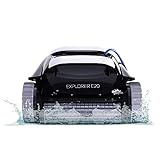
- WALL-SCRUBBING POWER: Dolphin Explorer E20 climbs walls efficiently, ensuring thorough cleaning...
- ACTIVE SCRUBBING: Elevate your pool maintenance with the Dolphin's active scrubbing brush...
Personally, I’m an Explorer E20 convert. There is a specific kind of peace that comes from knowing the robot is handling the waterline scum while I’m firing up the grill.
Frequently Asked Questions (FAQs)
Q: Can these handle “Pop-Up” in-floor cleaning heads?
A: They can sometimes struggle or get high-centered on very high pop-up heads. However, the E20’s wall-climbing motor gives it a bit more “oomph” to pull itself off obstacles compared to the E10.
Q: Do I need to buy special filters?
A: Both come with a standard fine filter basket. If you have a massive problem with ultra-fine “cloudy” dust or pollen, you can buy “Ultra-Fine” filter inserts separately, which work in both models.
Q: How long does the cord last?
A: The cables are high-quality, but they can tangle if you don’t store them correctly. I always recommend laying the cable out in the sun for an hour once a month to let it “relax” and prevent the dreaded “pigtail” curls.
Q: Will they pick up large oak leaves?
A: Yes, the intake is quite wide. However, if your pool is completely carpeted in thick, wet leaves in the fall, you should still do a quick pass with a leaf net first so you don’t clog the basket in the first five minutes.
Q: Can I leave them in the pool all week?
A: You can, but it’s not great for the seals or the cable. I recommend taking the robot out after each cycle, rinsing the filters, and storing it in a shaded area to maximize the life of the plastic.