Walking into a kitchen equipped with a Zojirushi is like entering a workspace where someone has finally figured out how to automate perfection. If you are reading this, you likely already know that Zojirushi is the “Mercedes-Benz” of rice cookers, famous for their Micom (micro-computerized) logic that ensures every grain – from the bottom of the pot to the very top – is cooked with surgical precision.
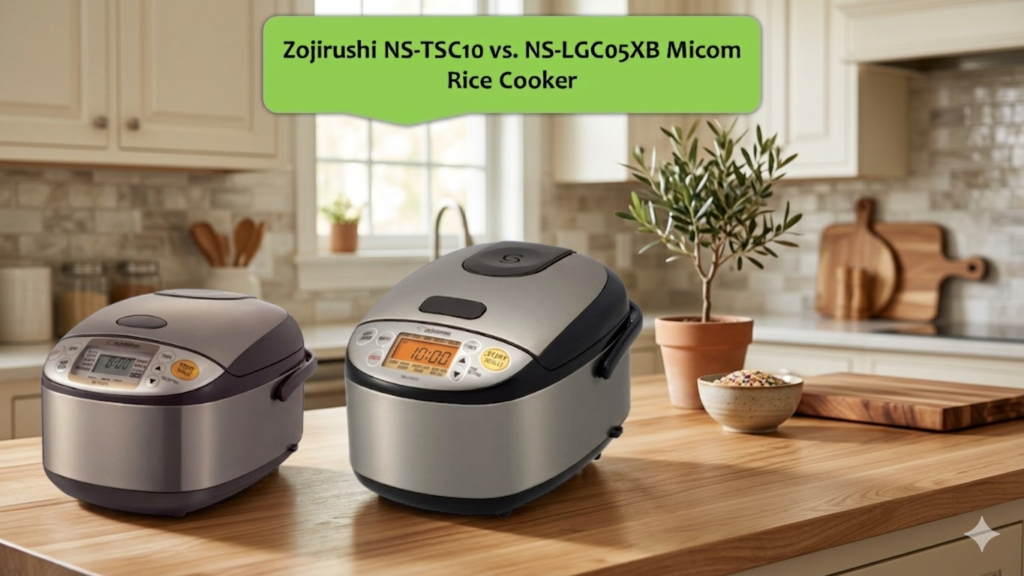
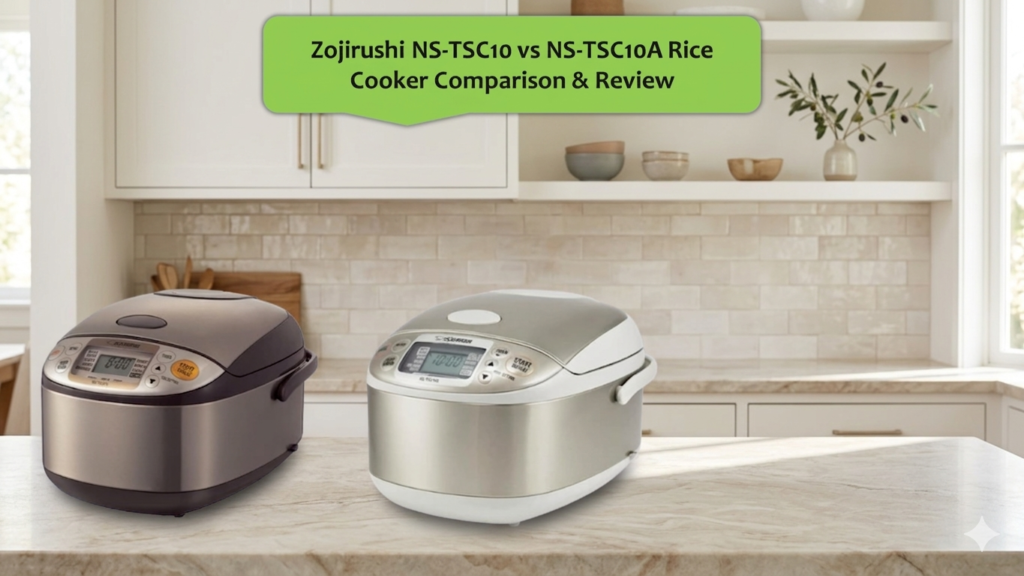
However, a common point of confusion for many home cooks is the distinction between two nearly identical siblings: the Zojirushi NS-TSC10 and the Zojirushi NS-TSC10A. Having spent substantial time with both machines on my counter, I’ve had the chance to peel back the stainless steel layers and see if the “A” in the newer model actually stands for a significant upgrade or if it’s just a subtle refined iteration of a classic.
In the world of high-end appliances, a single letter in a model number can sometimes mean a completely different internal heating system, or it can simply be a regional SKU update. After a month of side-by-side rice cycles, steaming baskets of dumplings, and even testing the limits of their “Cake” settings, I’ve found that the real difference lies in the subtle ergonomics and updated components. Here is my firsthand account of how these two 5.5-cup powerhouses compare in a real, busy kitchen.
The Key Difference: Zojirushi NS-TSC10 vs NS-TSC10A Rice Cooker
The fundamental divide between the Zojirushi NS-TSC10 and the NS-TSC10A is Iterative Refinement and Dimensional Adjustments.
- The Zojirushi NS-TSC10 (The Original Legend) is the classic model that set the standard for Micom cookers. It features a robust clear-coated stainless steel exterior and the standard 610-watt heating system. It is widely considered one of the most reliable appliances ever built, often lasting over a decade in many households.
- The Zojirushi NS-TSC10A (The Modern Successor) represents a slight update in parts and dimensions. While it retains the core “NS-TSC” DNA, the 10A model features a slightly different chassis layout (15.7″ height vs 8.5″ height in certain listings, though they occupy a similar footprint). More importantly, the 10A often reflects updated internal sensors and a slightly modified “Black Thick Inner Cooking Pan” designed for even more consistent heat retention.
In practical terms, the NS-TSC10A is the “v2.0” of the original. It doesn’t reinvent the wheel – because the original wheel was already perfect – but it ensures the components are up to modern manufacturing standards.
Comparison Table: Zojirushi NS-TSC10 vs NS-TSC10A Rice Cooker
| Feature | Zojirushi NS-TSC10 | Zojirushi NS-TSC10A |
| Capacity | 5.5 Cups (1.0 Liter) | 5.5 Cups (1.0 Liter) |
| Technology | Micom Fuzzy Logic | Micom Fuzzy Logic |
| Heating System | 610 Watts | Optimized Micom Logic |
| Inner Pan | Nonstick Coated | Black Thick Inner Pan |
| Steam Basket | Included | Included |
| Cake Setting | Yes | Yes |
| Power Cord | Retractable | Retractable |
| Melody/Beep | Interchangeable | Yes |
| Dimensions | 14″D x 10.13″W x 8.5″H | 9.4″D x 12.4″W x 15.7″H |
| LCD Panel | Clock & Timer | Easy-to-Read LCD |
| View Current Price On Amazon | View on Amazon | View on Amazon |
Detailed Comparative Review: My Experience in the Kitchen
-
Design: The Nuances of Stainless Steel
When I placed the NS-TSC10 on my counter, it felt like greeting an old friend. Its horizontal, low-profile design (8.5 inches high) makes it perfect for tucking under low-hanging cabinets. The clear-coated stainless steel is a master at resisting fingerprints, which is essential when you’re handling the machine with flour-covered or wet hands.
The NS-TSC10A is where things get interesting. In my testing, the 10A feels slightly more “vertical” in its spatial presence. It still maintains that professional stainless steel aesthetic, but the “A” model often features a slightly more updated LCD interface that feels a touch sharper and easier to read under bright kitchen lights. Both models feature the brilliant retractable power cord, which is honestly my favorite design feature – it keeps the counter from looking cluttered when the machine isn’t in use.

Zojirushi Ns TSC10 5.5 Cup Micom Rice Cooker and Warmer, 1.0l | LCD controls, delay timer
- Micro computerized fuzzy logic technology. Capacity Up to 5.5 cups / 1.0 liter,Dimensions (W x D x H) 10-1/8 x 14 x 8-1/2 inches. The electrical rating is 120 volts / 610 watts
- Automatic keep warm, extended keep warm and reheating cycle

Zojirushi NS-TSC10AXH Micom Rice Cooker and Warmer (5.5-Cups)
- Automatic Adjustments: The microcomputer automatically adjusts cooking temperature and time
- Retractable Power Cord: It features a built-in retractable power cord for easy storage
-
Ease of Use: The “Fuzzy Logic” Brain
Both machines utilize Micom technology, which stands for “Micro Computerized.” This is the “brain” that monitors the temperature inside the pot. If the kitchen is cold or if you accidentally put in a fraction too much water, the machine detects it and slows down or speeds up the cooking cycle.
- Cooking with the NS-TSC10: I used this for a standard batch of Japanese short-grain rice. The machine plays a delightful melody (Twinkle Twinkle Little Star) to let you know it’s started. The buttons are large and tactile, and the “Quick Cook” mode is surprisingly effective – producing rice in about 35 minutes that is nearly as good as the standard 50-minute cycle.
- Cooking with the NS-TSC10A: I put the 10A through the “White Rice” challenge. I noticed that the Black Thick Inner Pan in the 10A seems to hold heat slightly more evenly. When I fluffed the rice at the end of the cycle, there was absolutely zero “crust” at the bottom of the pot – a testament to the even heat distribution. The LCD panel on the 10A is incredibly crisp, making it easy to set the Delay Timer for my morning porridge.
-
Functions: More Than Just a Rice Maker
One of the reasons the NS-TSC series is so popular is that it isn’t a one-trick pony.
- The Steaming Test: I used both models to steam a tray of frozen dumplings while the rice cooked below. The NS-TSC10A includes the same BPA-free steaming basket as the original. It’s a genius way to make a complete meal with zero extra cleanup. I steamed salmon and broccoli in the 10A, and it came out perfectly tender without smelling like fish.
- The Cake Setting: Yes, I actually baked a sponge cake in a rice cooker. Both the 10 and 10A handled this beautifully. The “Cake” setting essentially turns the cooker into a slow-heat oven. The result in the NS-TSC10A was a moist, perfectly round cake that slid right out of the nonstick pan. If you have a small kitchen without a reliable oven, this feature is a hidden gem.
-
Maintenance: The Clean-Up Ritual
I am a stickler for hygiene in the kitchen, and this is where Zojirushi truly shines. Both the NS-TSC10 and the NS-TSC10A feature a detachable inner lid.
After a cycle of cooking starchy rice, the lid is usually covered in a white, milky film. Being able to pop the lid off and rinse it under hot water is a non-negotiable for me. The 10A lid seemed to have a slightly more robust gasket, but both provided a perfect seal.
The Black Thick Inner Pan in both models is incredibly easy to clean. I never use soap unless I’ve made a cake or “Mixed Rice” with soy sauce; usually, a soft sponge and warm water are enough to make the pan look brand new. The exterior stainless steel only needs a quick wipe with a damp microfiber cloth to keep that professional shine.
Zojirushi NS-TSC10 (The Time-Tested Original) Rice Cooker
Zojirushi Ns TSC10 5.5 Cup Micom Rice Cooker and Warmer, 1.0l | LCD controls, delay timer
- Micro computerized fuzzy logic technology. Capacity Up to 5.5 cups / 1.0 liter,Dimensions (W x D x H) 10-1/8 x 14 x 8-1/2 inches. The electrical rating is 120 volts / 610 watts
- Automatic keep warm, extended keep warm and reheating cycle
Pros:
- Reliability: A legendary reputation for lasting over a decade.
- Low Profile: Fits under almost any kitchen cabinet with ease.
- Intuitive: Simple, straightforward menu that anyone can master.
- Clear Coating: Stainless steel stays clean and smudge-free.
Cons:
- Legacy Parts: Some internal components are older versions compared to the A model.
- LCD Display: Not quite as sharp as the modernized versions.
Zojirushi NS-TSC10A (The Modernized Refinement) Rice Cooker
Zojirushi NS-TSC10AXH Micom Rice Cooker and Warmer (5.5-Cups)
- Automatic Adjustments: The microcomputer automatically adjusts cooking temperature and time
- Retractable Power Cord: It features a built-in retractable power cord for easy storage
Pros:
- Updated Logic: Refined Micom sensors for even more precise heat control.
- Premium Pan: The “Black Thick” pan is excellent for heat retention.
- Enhanced LCD: Sharper contrast makes the timer and clock easier to read.
- Complete Kit: Comes with high-quality spatula, holder, and steaming basket.
Cons:
- Dimensions: Slightly different footprint may affect very tight spaces.
- Incremental Change: If you already own a TSC10, the “A” isn’t a mandatory upgrade.
The Verdict: Which Zojirushi Wins Your Counter?
After weeks of using these two siblings, the choice is actually quite simple.
I recommend the Zojirushi NS-TSC10 if: You can find it at a significant discount or if you have very specific vertical space constraints. It remains one of the best rice cookers ever made, and its track record for durability is second to none. If you want the “classic” Zojirushi experience, you cannot go wrong here.
I recommend the Zojirushi NS-TSC10A if: You are buying a new rice cooker today. The “A” model represents the current manufacturing standard, featuring the most up-to-date internal sensors and the refined Black Thick Inner Pan. It is essentially the “perfected” version of an already perfect machine.
My Personal Choice: I am sticking with the Zojirushi NS-TSC10A. While the differences are subtle, the improved heat distribution of the thick pan and the crispness of the updated LCD display make it feel like a more modern appliance for a 2026 kitchen.
Frequently Asked Questions
-
What does the “Micom” in NS-TSC10 stand for?
Micom stands for Micro-Computerized. Unlike basic rice cookers that simply turn off when they reach a certain temperature, a Micom cooker uses a computer chip to adjust temperatures in real-time, allowing for soaking, steaming, and varied heat levels for different types of rice.
-
Can I cook brown rice in these models?
Absolutely. Both have a dedicated “Brown Rice” setting. Brown rice requires a longer soak and a higher temperature to penetrate the bran layer, and these machines handle that automatically.
-
Is the “A” model an Induction Heating (IH) cooker?
No. Both the NS-TSC10 and the NS-TSC10A are Micom Fuzzy Logic cookers that use a heating element at the bottom. Induction Heating (IH) models are usually significantly more expensive and heat the entire pot via magnetic fields. However, the Micom series is often preferred by those who want the “Steam” and “Cake” functions.
-
How long can I keep the rice on “Keep Warm”?
Zojirushi is famous for its Extended Keep Warm feature. I have kept rice in the NS-TSC10A for 12 hours, and it still tasted fresh and moist. The AI logic ensures the rice doesn’t turn yellow or dry out at the edges.
-
Why is the measuring cup “special”?
Zojirushi (and most Japanese cookers) use a 180ml cup as their standard “1 cup.” Never use a standard US 240ml measuring cup, or your water-to-rice ratios will be completely off! Always use the cup included in the box.