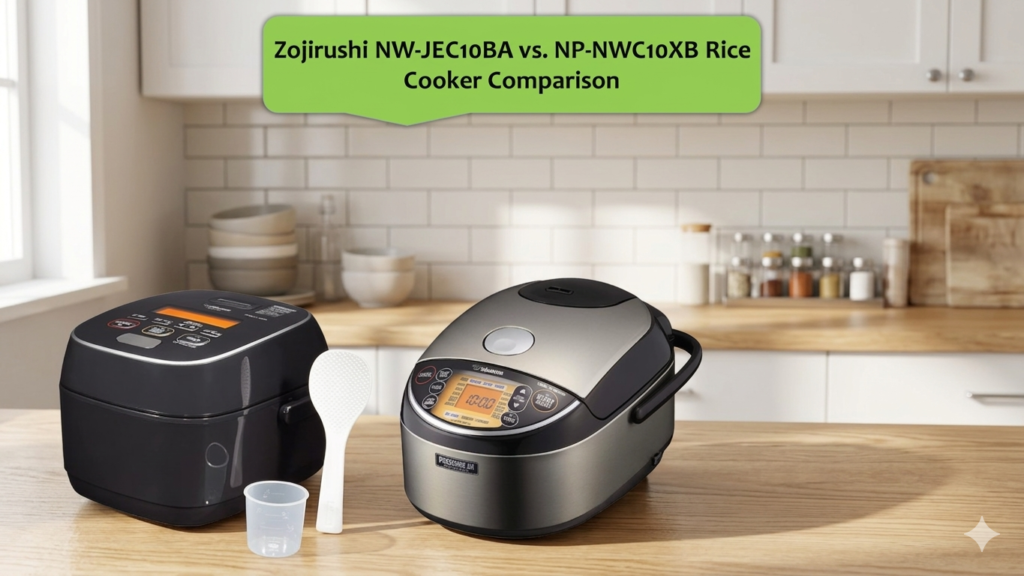
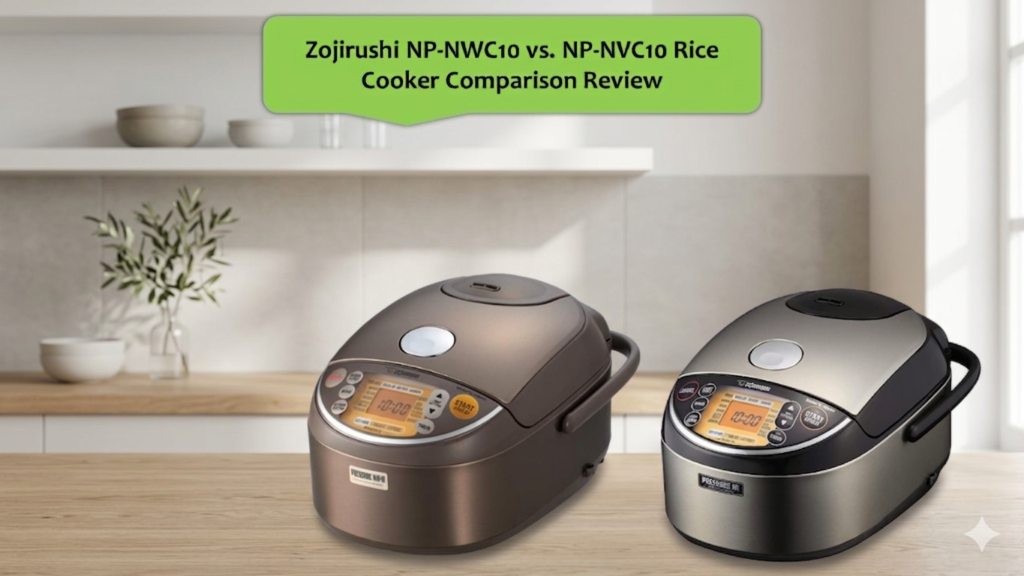
If you take your rice seriously, you eventually find yourself staring at the “Made in Japan” elite tier of kitchen appliances. I spent the last few months living with two of the most sophisticated machines ever designed for a grain of rice: the Zojirushi NP-NWC10 and the legendary Zojirushi NP-NVC10.
At this price point, you aren’t just buying a pot that boils water; you are investing in a pressurized induction system that uses Artificial Intelligence to manipulate the texture of your food. These machines are designed to last decades, but they approach the “perfect bowl” from slightly different angles.
The NP-NWC10 is the sleek, modern successor built for a global palate, while the NP-NVC10 is a cult-classic specialist known for unique textures that the newer model has phased out. After cooking everything from sticky sushi rice to heart-healthy GABA brown rice, I’ve broken down exactly where these two diverge so you can decide which one earns a permanent spot on your counter.
The Key Difference: Zojirushi NP-NWC10 vs. NP-NVC10 Review
The fundamental divide between the Zojirushi NP-NWC10 and the NP-NVC10 is Grain Versatility and Moisture Management.
- The Zojirushi NP-NWC10 (The Global Specialist) is the updated “Stainless Black” model. It reflects modern eating habits by including dedicated settings for Jasmine Rice, Congee, and Steel Cut Oatmeal. Its AI is more refined, learning and adjusting the soak and steam times with every cycle to ensure consistency even if you live at high altitudes or use slightly different water-to-rice ratios.
- The Zojirushi NP-NVC10 (The Traditionalist) is the “Stainless Brown” veteran. It lacks the Jasmine and Oatmeal presets but features a unique “Scorch” setting that toasts the bottom of the rice to a crispy golden brown. It also includes a Steam-Reduce function, which is a mechanical necessity for anyone with low-hanging wooden cabinets who wants to minimize moisture output.
Essentially, the NP-NWC10 is the best “all-arounder” for a modern, diverse pantry, whereas the NP-NVC10 is for the rice purist who loves traditional crispy textures and needs specific kitchen-friendly features.
Comparison Table: Zojirushi NP-NWC10 vs. NP-NVC10 Review
| Feature | Zojirushi NP-NWC10 | Zojirushi NP-NVC10 |
| Heating Method | Pressure Induction (IH) | Pressure Induction (IH) |
| Logic | AI (Artificial Intelligence) | AI (Artificial Intelligence) |
| Finish | Stainless Black | Stainless Brown |
| Key New Settings | Jasmine, Steel Cut Oatmeal | Scorch (Crispy), Steam-Reduce |
| Pressure Levels | 3 Automatic Levels | Variable Automatic |
| Umami Setting | Yes (Enhanced) | Yes |
| Capacity | 5.5 Cups (1.0L) | 5.5 Cups (1.0L) |
| Dimensions | 10.13″ H x 15.38″ W | 8.62″ H x 10.12″ W |
| Origin | Made in Japan | Made in Japan |
| View Current Price on Amazon | View on Amazon | View on Amazon |
Detailed Comparative Review: From the Kitchen Counter
-
Design: Modern Stealth vs. Classic Warmth
The NP-NWC10 arrived in a striking “Stainless Black” finish that looks much more at home in a contemporary kitchen than the traditional brown models. It feels substantial and premium. The interface is intuitive, with an orange-backlit LCD that I found much easier to read during early morning breakfast prep.
The NP-NVC10 has a smaller vertical footprint. At just 8.62 inches tall, it fits comfortably under my lowest kitchen cabinets even when the lid is open. The “Stainless Brown” has a nostalgic, high-end Japanese kitchen feel. Both models are built like tanks, featuring platinum-infused non-stick inner cooking pots that are heavy, durable, and designed to enhance the natural sweetness of the rice.

Zojirushi Np NWC10XB Pressure Ih Rice Cooker 5.5 Cup (Black) | Nonstick inner pan
- Pressurized Cooking and Steaming: Promotes gelatinization and produces sticky and plump rice
- AI (Artificial Intelligence): AI technology learns and adjusts the cooking cycle to get perfect results
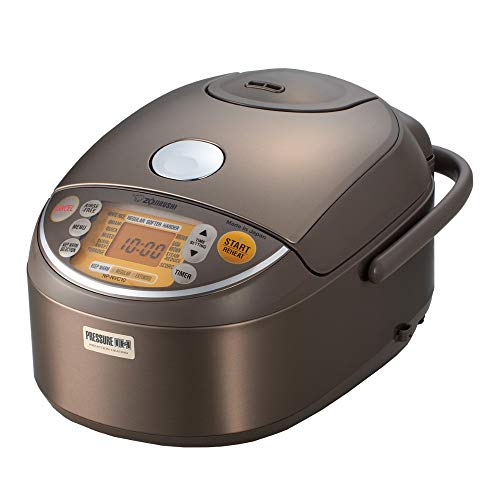
Zojirushi NP-NVC10 Induction Heating Pressure Cooker and Warmer, 5.5 Cup, Stainless Brown, Made in Japan
- Multi-menu cooking functions include settings for white, mixed, sushi/sweet rice, porridge, brown, gaba brown and quick cooking
- Umami setting extends soaking and steaming time for better rice
-
Ease of Use: The “Smart” Rice Experience
Both machines utilize Artificial Intelligence (AI) to monitor the internal temperature and the volume of rice.
- The NWC10 Advantage: I was impressed by how it handled Steel Cut Oatmeal. Usually, oatmeal is a messy, bubbling disaster in a standard cooker. In the NWC10, it was perfectly creamy without any boil-over. The “Jasmine” setting was another win; it managed the delicate fragrance of the long grains without making them mushy.
- The NVC10 Advantage: This model is for the “set it and forget it” crowd who has a very specific kitchen layout. The Steam-Reduce setting actually works—I noticed significantly less condensation on the underside of my cabinets. If you live in a small apartment or have expensive cabinetry, this feature is more than just a luxury; it’s a necessity.
-
Functions: Perfecting the Texture
Pressure Induction is the “secret sauce” here. By raising the boiling point, the machine forces moisture into the very core of the grain.
- Gelatinization: In the NP-NWC10, the white rice came out incredibly plump and “sticky” (in the best way possible). The Umami setting extends the soaking time just enough to release more sugars, resulting in a noticeably sweeter, richer flavor profile.
- The Crispy Bottom: On the NP-NVC10, I used the Scorch setting to make a batch of mixed rice. The result was a thin, golden, crispy crust at the bottom of the pot. It adds a smoky, toasted dimension to the meal that the newer NWC10 simply cannot replicate. If you enjoy the texture of stone-pot rice, the NVC10 is the clear winner.
-
Maintenance: Built for Daily Use
Zojirushi knows that no one wants to spend thirty minutes cleaning a rice cooker. Both models feature a flat interior and a detachable stainless steel inner lid.
I found that the NP-NWC10’s exterior was slightly more resistant to fingerprints, which is a plus for the “Stainless Black” finish. The inner lids pop off with a simple latch, and I usually just rinsed them under hot water after every use. Both machines require you to hand-wash the inner pot to protect the non-stick coating. One thing I did notice: the NWC10’s lid feels a bit more streamlined, making it slightly easier to wipe down the rubber gaskets where starch can sometimes accumulate.
Zojirushi NP-NWC10 (The Modern Powerhouse) Rice Cooker
Zojirushi Np NWC10XB Pressure Ih Rice Cooker 5.5 Cup (Black) | Nonstick inner pan
- Pressurized Cooking and Steaming: Promotes gelatinization and produces sticky and plump rice
- AI (Artificial Intelligence): AI technology learns and adjusts the cooking cycle to get perfect results
Pros:
- Jasmine Setting: Finally, a pressurized cooker that handles long-grain rice perfectly.
- Oatmeal Mode: Makes breakfast a “press a button and walk away” task.
- Advanced AI: More responsive to water levels and environmental temperature.
- Modern Look: Fits better with current kitchen trends.
Cons:
- Taller Design: May require more clearance to open the lid fully.
- No “Scorch”: You lose the ability to make crispy-bottomed rice.
Zojirushi NP-NVC10 (The Traditional Favorite) Rice Cooker
Zojirushi NP-NVC10 Induction Heating Pressure Cooker and Warmer, 5.5 Cup, Stainless Brown, Made in Japan
- Multi-menu cooking functions include settings for white, mixed, sushi/sweet rice, porridge, brown, gaba brown and quick cooking
- Umami setting extends soaking and steaming time for better rice
Pros:
- Scorch Setting: The only way to get that authentic toasted rice texture.
- Steam-Reduce: Vital for protecting low cabinets and small spaces.
- Compact Height: Fits in tighter vertical spaces.
- Legendary Status: Years of user data prove its long-term durability.
Cons:
- Lacks Jasmine Mode: Long-grain rice is more difficult to get right.
- Aesthetic: The brown finish can look a bit dated in some kitchens.
The Verdict: Which Zojirushi Wins?
After months of back-to-back testing, the “best” rice cooker depends entirely on your pantry.
I recommend the Zojirushi NP-NWC10 if: You eat a wide variety of grains. If you love Thai food, Japanese porridge, and steel-cut oats, this is the most versatile machine Zojirushi has ever built. It is the perfect upgrade for a modern family who wants one machine to do it all.
I recommend the Zojirushi NP-NVC10 if: You are a rice purist who values specific textures. If the “crispy bit” at the bottom of the pot is your favorite part of the meal, or if you are specifically worried about steam damaging your kitchen, the NVC10 is the only choice.
My Personal Choice: I am sticking with the Zojirushi NP-NWC10. The “Stainless Black” looks beautiful on my counter, and the dedicated Jasmine setting has fundamentally changed my weeknight cooking. It’s a smarter, more modern machine that fits perfectly into a diverse kitchen.
Frequently Asked Questions
-
Does the pressure make it cook faster?
Surprisingly, no. While it uses pressure, these machines prioritize the quality of the grain over speed. A standard white rice cycle still takes about 50-60 minutes. If you are in a rush, both have a “Quick Cook” setting, but the texture won’t be quite as flawless.
-
Is the “Stainless Black” actual metal?
Yes, the lid and body are made of high-quality stainless steel with a clear coating that makes it easy to wipe down and resistant to stains.
-
Can I cook brown rice in these?
Absolutely. Both machines have a GABA Brown Rice setting that soaks the rice for two hours at a specific temperature to “activate” the grains, making them softer and increasing their nutritional value.
-
Do I need to use the Zojirushi measuring cup?
Yes! The “cup” used by Zojirushi is about 180ml (6.1 oz), which is the standard Japanese rice measurement. Using a standard American measuring cup will result in the wrong water-to-rice ratio.
-
Is it loud?
You will hear a small fan running to keep the induction coils cool, and an occasional “click” as the pressure ball moves to regulate the internal environment. It’s much quieter than a standard pressure cooker, but you will know it’s working.