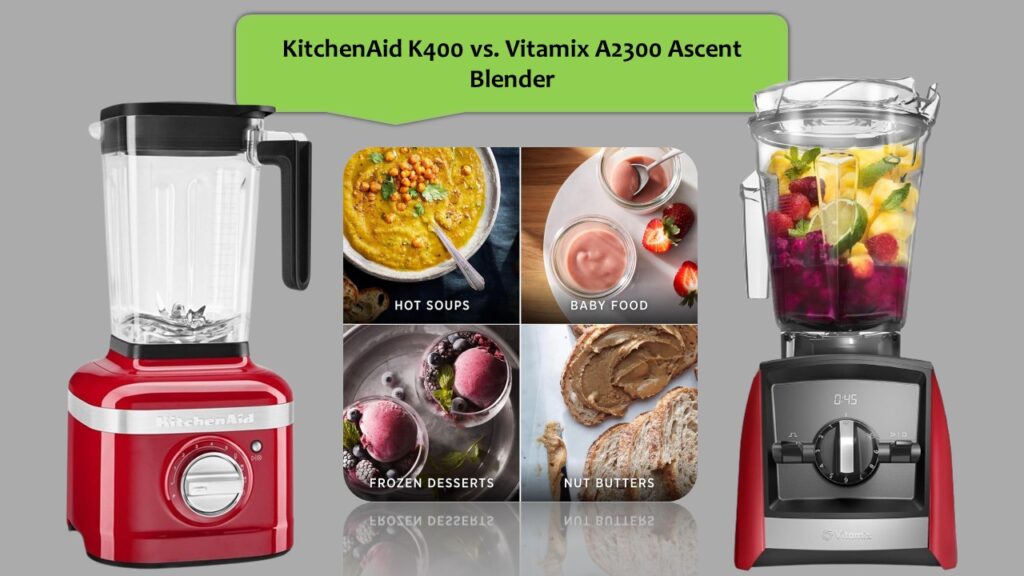
There’s a high-stakes drama that unfolds on a kitchen counter when a blender meets a frozen almond or a fibrous stalk of kale. It’s a test of torque, engineering, and—let’s be honest—sheer willpower. I’ve spent the better part of a month living in a “Red State”—specifically, with the KitchenAid K400 in Passion Red and the Vitamix A2300 Ascent Series in Red.
While both of these machines look stunning enough to be permanent fixtures in a designer kitchen, they represent two very different schools of culinary thought. One is a refined, heavy-duty machine that aims to make blending “smart” and automated for the home cook. The other is a professional-grade power plant that puts the driver in total control of a digital cockpit. After weeks of pureeing soups, crushing ice into snow, and making enough nut butter to last a lifetime, I’ve found that the “best” blender isn’t about raw power alone—it’s about how much you want to interact with your ingredients.
The Key Difference: Professional Versatility vs. Intuitive Automation
The fundamental difference between the KitchenAid K400 and the Vitamix A2300 comes down to the container ecosystem and the motor’s “intelligence.” The Vitamix A2300 is a Smart-System blender featuring Self-Detect wireless connectivity, which recognizes the container size and adjusts its internal settings accordingly.
It also features a built-in digital timer and a 64-oz low-profile container that is significantly larger than the KitchenAid. On the other hand, the KitchenAid K400 focuses on Intelli-Speed Motor Control, which senses the weight of the ingredients to maintain optimal speed, and offers preset programs (Ice Crush, Icy Drink, Smoothie) that the Vitamix A2300 lacks in favor of total manual control.
Comparison Table: KitchenAid K400 vs. Vitamix A2300
| Feature | KitchenAid K400 | Vitamix A2300 Ascent |
| Container Size | 56 oz (Ribbed Jar) | 64 oz (Low-Profile) |
| Motor Intelligence | Intelli-Speed Control | Wireless Self-Detect Tech |
| Control Type | Dial + 3 Presets | Variable Speed + Pulse + Timer |
| Timer Display | No | Yes (Digital Countdown) |
| Cleaning Mode | Yes (Dedicated Cycle) | Manual (High-Speed Wash) |
| Startup Style | Soft Start (Anti-Splatter) | Manual Start |
| Dimensions | 15.8″ H x 9.02″ W | 17″ H x 8″ W |
| Included Tools | Motor Base & Jar | Motor Base, Jar & Tamper |
| View Current Price on Amazon | View on Amazon | View on Amazon |
Detailed Comparative Review: My Kitchen “Burn-In” Test
I put these machines through a rigorous series of tests, looking at how they handle daily tasks like morning smoothies and weekend meal prep.
Design: The Die-Cast Weight vs. The Digital Command Center
The first thing I noticed when unboxing the KitchenAid K400 was its weight. The base is die-cast metal, and in Passion Red, it looks like a piece of classic Americana. It feels permanent. At 15.8 inches tall, it tucked perfectly under my standard kitchen cabinets, which is a major win for people with limited vertical clearance.
The Vitamix A2300 is taller (17 inches) and looks much more modern. It feels like a piece of high-end tech. The highlight of the Vitamix design is the Low-Profile 64-oz container. It’s wide at the base, which makes it much easier to scrape out thick mixtures like hummus or nut butter. However, the Vitamix is a “Self-Detect” machine—if you don’t seat the lid or the container perfectly, the wireless sensors won’t let it start. It’s a great safety feature, but it can be a bit finicky if you’re in a hurry.
Ease of Use: Presets vs. Precision Timing
Using the K400 is incredibly satisfying because of the Soft Start feature. When I turned it on, the motor started slowly to pull the kale and frozen fruit into the blades before ramping up. This prevented that “explosion” of ingredients against the lid that usually happens with high-powered blenders. I also loved the 3 presets. For a morning smoothie, I just turned the dial to “Smoothie” and walked away to feed the dog.
The Vitamix A2300 takes a more “professional” approach. It doesn’t have a “Smoothie” button. Instead, it has a Variable Speed Dial (1-10) and a Digital Timer. At first, I missed the presets, but then I realized the power of the timer. If a recipe says “blend for 45 seconds,” the Vitamix counts it out for you. It puts you in the driver’s seat. If you like to experiment and fine-tune your textures, the Vitamix feels more rewarding.
Functions: Vortex vs. Raw Force
KitchenAid uses a 3-part blending system with a ribbed jar and asymmetric blades. In my testing, this created a very impressive vortex. When I made a batch of almond milk, the K400 pulverized the nuts into a surprisingly smooth liquid without needing much “poking” with a spatula.
However, the Vitamix A2300 comes with a Tamper, and honestly, that tool is a game-changer. When I was making a thick acai bowl that would usually “stall” a blender, I used the tamper to push ingredients into the blades while it was running. The Vitamix motor is a beast; it never once sounded like it was struggling. While the KitchenAid is smart enough to adjust its speed (Intelli-Speed), the Vitamix is powerful enough to simply brute-force its way through anything you throw at it.
Maintenance: The Self-Clean Cycle
Both of these brands tell you that they are “self-cleaning,” but they go about it differently. The K400 has a dedicated Self-Clean cycle on the dial. I added a drop of soap and some water, hit the button, and the machine ran a pre-programmed sequence of pulses and high-speed spins.
The Vitamix A2300 doesn’t have a dedicated button for cleaning, but you just turn the variable speed dial to 10 for about 60 seconds. Both jars are dishwasher safe (top rack), but I found that the Vitamix’s wider, low-profile jar was much easier to hand-wash because I could actually reach my hand down to the bottom without hitting the blades.
KitchenAid K400 Variable Speed Blender
Pros:
- Soft Start Tech: Eliminates splatters and messy lids.
- Presets: One-touch buttons for smoothies and ice are incredibly convenient.
- Aesthetic: The die-cast metal base is arguably the most beautiful on the market.
- Height: Fits under almost any cabinet at under 16 inches.
Cons:
- Smaller Jar: 56 oz can feel tight for large family batches of soup.
- No Tamper Included: You might have to stop and stir thick mixtures manually.
- Jar Design: The narrow, ribbed jar can be trickier to scrape clean.
Vitamix A2300 Accent Series Smart Blender
Pros:
- Smart Connectivity: Automatically detects container size for precision blending.
- Digital Timer: Removes the guesswork from manual recipes.
- Large Capacity: 64-oz container is perfect for meal-prepping and families.
- Tamper Included: Essential for thick nut butters and frozen desserts.
- Longevity: Vitamix has a legendary reputation for motors that last decades.
Cons:
- No Presets: You have to manually manage every blend.
- Price: Generally a more significant investment than the KitchenAid.
- Size: 17 inches tall may be too high for some kitchen cabinets.
The Final Recommendation: Which Red Blender Reigns Supreme?
After a month of heavy use, the winner depends on your “kitchen personality.”
I recommend the KitchenAid K400 if you are looking for a “daily driver” that is both beautiful and easy to use. If your primary use is morning smoothies, iced drinks, and occasional soups, the K400’s presets and Soft Start feature make it the most “user-friendly” high-end blender I’ve tested. It’s a fantastic machine for someone who wants professional results without a steep learning curve.

KitchenAid K400 Variable Speed Blender - KSB4027, Passion Red, 56 oz
- Blending is a breeze with the 3 part blending system, made of the blender's vortex-creating ribbed jar design, unique asymmetric blade, and the smarts behind the Intelli-Speed Motor Control, which automatically senses contents and maintains the optimal speed for a better blend.
- Quickly blend and take on notoriously tough ingredients like kale and almonds with ease, so you quickly turn whole foods into smoothies and enjoy.
I recommend the Vitamix A2300 if you are a serious home cook or a “blending enthusiast.” The inclusion of the tamper and the 64-oz capacity makes it much better for “heavy” tasks like grinding grain, making thick nut butters, or blending hot soups for a large family. The A2300 is an entry into an ecosystem of containers—you can buy smaller cups or bowls that the base will “detect” wirelessly.

Vitamix A2300 Ascent Series Smart Blender, Professional-Grade, 64 oz Low-Profile Container, Red
- You're in Control: Variable Speed Control and Pulse feature let you manually fine-tune the texture of any recipe
- Built-In Wireless Connectivity: The motor base will automatically adjust the maximum blending times for the container size you’ve chosen. Add a range of compatible container sizes, building a customized blending system designed to fit your needs
Personally, the Vitamix A2300 is my pick for a “forever” appliance. While I missed the KitchenAid’s “Smoothie” button for a few days, the sheer power and the convenience of the digital timer make it feel like a more professional tool.
Frequently Asked Questions (FAQs)
Q: Can these blenders make hot soup?
A: Yes, but in different ways. The Vitamix A2300 can actually heat soup through the friction of the blades if you run it on high for about 6 minutes. The KitchenAid K400 is great for pureeing hot ingredients you’ve cooked on the stove, but it isn’t designed to “cook” the soup through friction alone.
Q: Are the jars made of glass or plastic?
A: Both use high-quality, BPA-free Tritan plastic. Glass is rarely used in high-performance blenders because it can shatter under the extreme vibrations of a 2-peak-horsepower motor.
Q: Is the Vitamix A2300 loud?
A: Yes. All high-performance blenders are loud. Because the A2300 has a very powerful motor, it sounds like a small jet engine on setting 10. The KitchenAid is slightly quieter, but only by a few decibels.
Q: Does the K400 have a warranty?
A: Yes, KitchenAid typically offers a 5-year limited warranty on the K400, while Vitamix offers a 10-year warranty on the Ascent series. This is a big part of the price difference!
Q: Can I grind coffee beans in these?
A: Absolutely. Both can turn coffee beans into a fine grind in seconds. However, if you do this frequently, the beans may “cloud” the plastic jar over time. Many Vitamix users buy a separate “Dry Grains” container for this purpose.